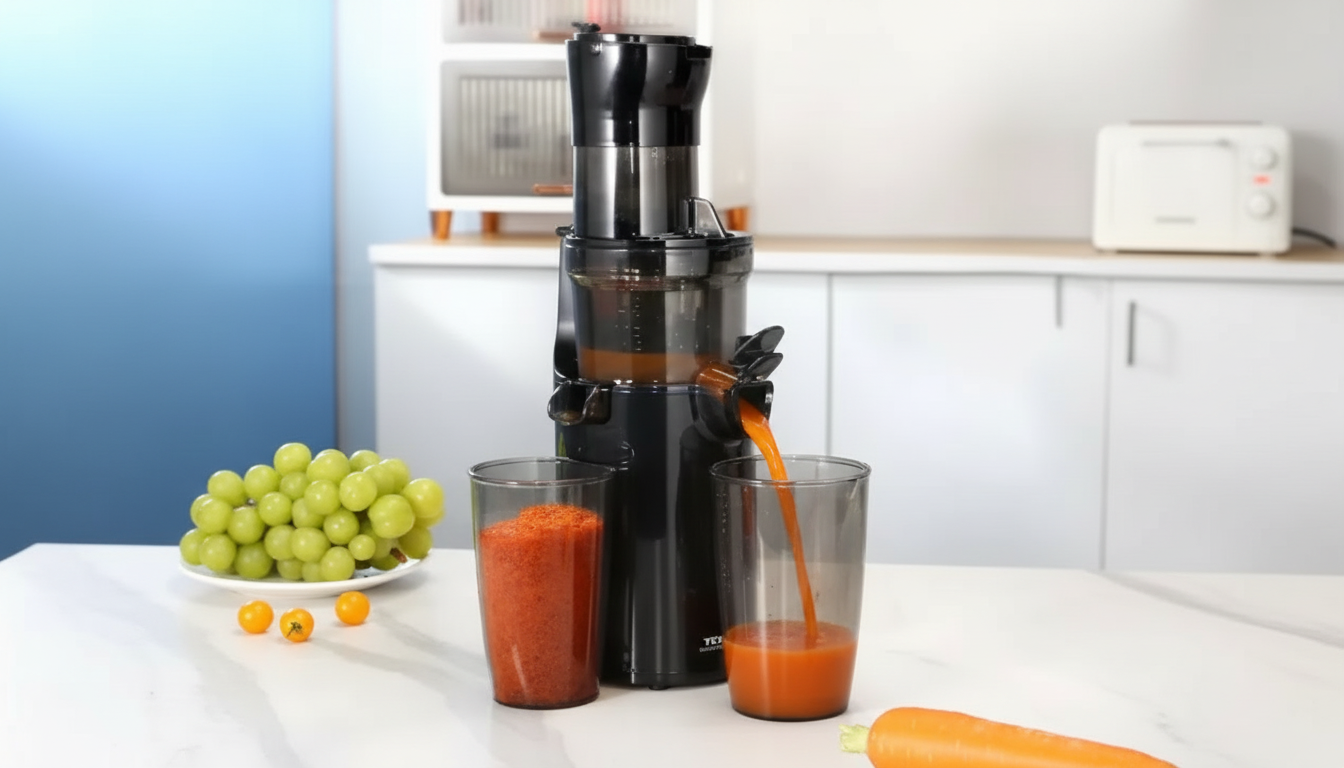
Cold press juicers (also called masticating juicers) are often better if the goal is higher-quality juice with less foam, less separation, and a smoother texture. They work by slowly crushing and pressing produce rather than spinning it at high speed, which tends to produce a more consistent glass of juice—especially with leafy greens, herbs, and softer fruits.
Most shoppers notice three practical differences. First, cold press models typically yield more juice from greens and fibrous produce like kale, celery, wheatgrass, and ginger. Second, the juice generally oxidizes more slowly, so it can taste fresher for longer in the fridge when stored in an airtight container. Third, cold press machines are usually quieter than centrifugal juicers, making them easier to use early in the morning or in small homes.
Cold press juicers can cost more and usually take longer to juice. Prep can also feel more involved because many models have smaller feed chutes, meaning apples, beets, and carrots may need extra chopping. Cleanup varies by design: some are quick-rinse friendly, while others have more parts, fine mesh filters, or tight corners that add a few minutes to washing.
If juicing is an occasional habit and speed matters most, a centrifugal juicer can be a solid choice for quick glasses of juice from harder fruits and vegetables. If juicing is a frequent routine—or if greens and herbs are the priority—a cold press juicer is typically the better long-term pick for yield, texture, and reduced separation.
For a deeper breakdown of performance, trade-offs, and what to look for when buying, visit the full guide: Are cold press juicers really better?
Rinse the parts immediately after juicing, soak the filter in warm water for a minute, then use the included brush to clear pulp from the mesh. Letting residue dry is what usually makes cleanup take longer.









Leave a comment