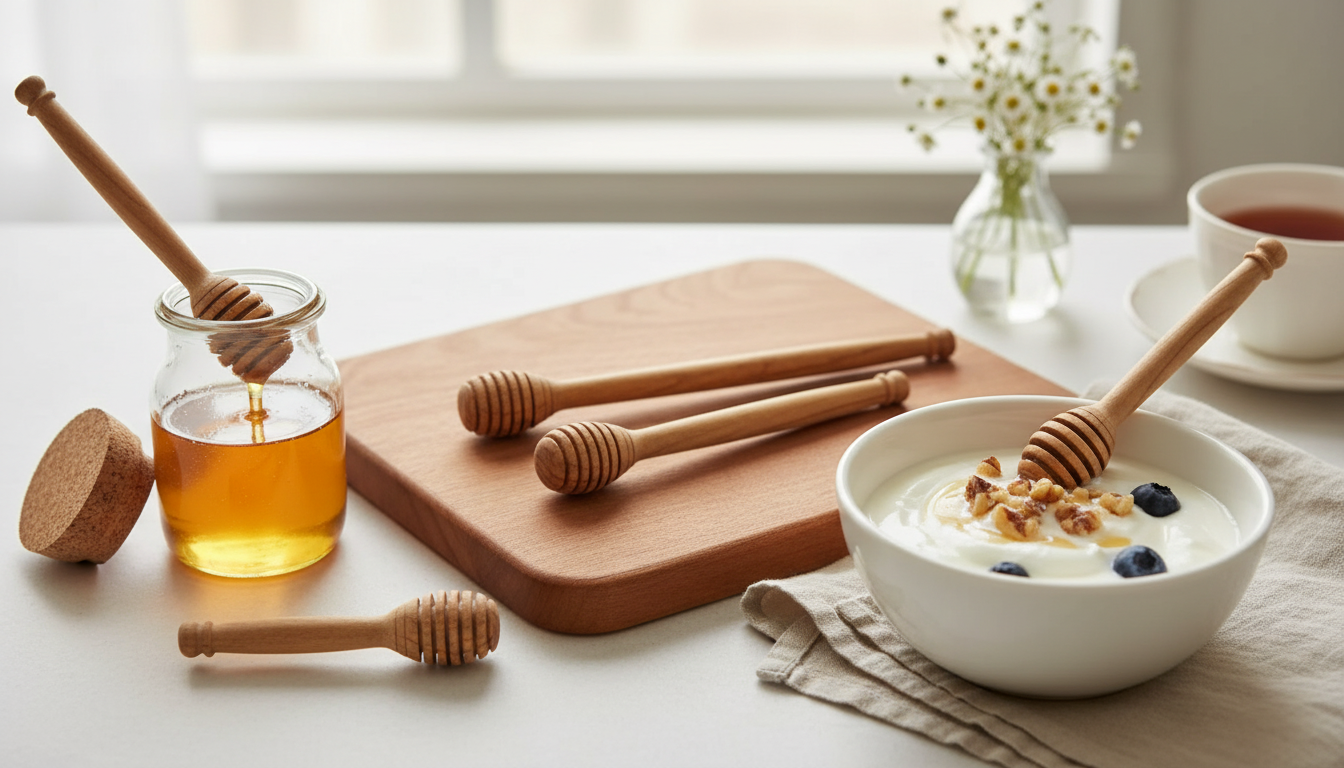
A honey dipper should drizzle neatly, feel comfortable in the hand, and be easy to care for between breakfasts, tea time, and baking. An olive wood honey dipper stick brings warm grain, a naturally sturdy feel, and a classic spiral head designed to catch honey and release it in a controlled stream—without the sticky mess that comes from pouring straight from the jar.
The best part of a traditional honey dipper is the way it handles thick, slow-moving honey. Olive wood adds a premium feel while keeping the tool simple and practical for everyday use.
If you want the classic experience (dip, twist, drizzle) with a tool that looks at home on a breakfast tray, an olive wood dipper fits the job.
A honey dipper earns its keep when it lives near the kettle, toaster, or serving board. It’s a small tool that can make sweeteners easier to portion and cleaner to serve.
For food storage and handling basics, the USDA FoodKeeper resource offers practical guidance for pantry staples like honey.
The key to a tidy drizzle is a gentle twist. The grooves are designed to “hold” honey briefly, giving you a moment to move from jar to plate without a sudden drip.
If honey is being served around young children, it’s also worth reviewing safety guidance for infants from the FDA, which includes important notes related to honey.
Olive wood is durable, but like most natural wood tools, it lasts longer with quick cleaning and occasional conditioning. The goal is to keep moisture from lingering in the grain.
With a little care, an olive wood dipper can stay smooth, rich-looking, and comfortable to use for a long time.
Material affects drizzle control, feel in the hand, and long-term care. Choose based on how often it will be used, whether it will live on a serving board, and how much maintenance is acceptable.
| Material | Drizzle Control | Care Needs | Best For |
|---|---|---|---|
| Olive wood | Excellent for thick honey; controlled release with grooves | Hand wash; oil occasionally | Daily use, tea service, gifting |
| Silicone | Good; flexible head can drip if overloaded | Easy rinse; dishwasher often OK | Busy kitchens, minimal maintenance |
| Stainless steel | Good; smooth surface can release quickly | Easy wash; durable | High-volume use, modern table settings |
| Plastic | Fair; varies by design | Easy wash; may stain/retain odors | Casual use, budget options |
Honey tends to show up in small rituals—morning tea, weekend pancakes, a quick cheese plate—so it’s easy to build a coordinated setup that looks intentional and stays functional.
For more ideas on enjoying honey—from drinks to savory pairings—visit the National Honey Board.
Yes, but it’s easier after gently warming the jar to soften the crystals. Rotate the dipper to load the grooves, then drizzle slowly while continuing to twist for better control.
Dishwashers are not recommended for wood because heat and detergents can dry it out and dull the finish. Hand wash quickly, dry right away, and oil occasionally to keep it in good condition.
It can drizzle maple syrup, agave, molasses, and even warmed chocolate. It’s also handy for adding small amounts of sweetener to tea, coffee, and other drinks.









Leave a comment