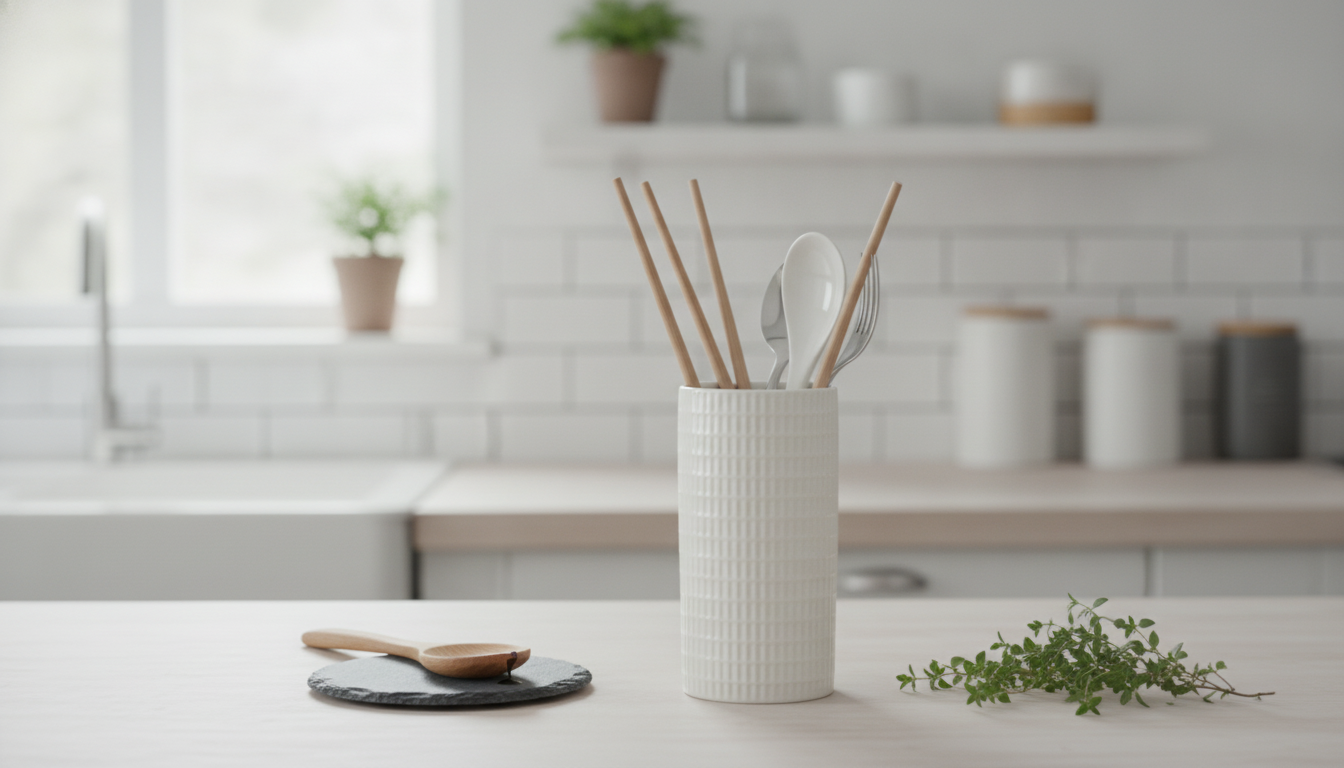
A utensil rest does more than keep a spoon off the counter—it keeps sauces, oils, and moisture contained while cooking and plating. This modern embossed ceramic spoon and chopstick holder is designed for everyday reach: stable on the countertop, easy to rinse, and visually clean enough to leave out between meals. If your goal is a more composed prep area (without adding bulky organizers), a small ceramic rest can make the whole workflow feel simpler.
During busy cooking sessions, the mess tends to spread: tasting spoons migrate, chopsticks land on the cutting board, and sauces end up in places that are annoying to wipe mid-recipe. A dedicated holder keeps the “rest” step intentional, so you’re not improvising with paper towels or balancing utensils on pan rims.
For food safety and cleaner prep habits, it also helps to keep used utensils contained rather than touching multiple surfaces. Basic cleanliness and separation can reduce cross-contamination risks during cooking (see the USDA food safety guidance for practical kitchen handling tips).
A utensil rest earns its place when it’s easy to live with: simple shape, quick rinse, and a footprint that doesn’t compete with your cutting board. Ceramic is a classic kitchen material because it’s smooth, stable, and generally non-porous compared with unfinished wood.
| Option | Best for | Trade-offs |
|---|---|---|
| Ceramic spoon & chopstick holder | Daily cooking, sauce-heavy meals, a clean countertop look | Can chip if dropped; needs basic care |
| Silicone rest | High-heat areas and quick wipe-downs | Can collect lint/grease film; look may feel less refined |
| Metal rest | Durability and thin profiles | May show water spots; can slide if lightweight |
| Wood rest | Warm, natural styling | May absorb stains/odors; requires more careful cleaning |
If you’re aiming for a countertop that looks intentional even when you’re mid-recipe, ceramic hits a nice balance: it looks elevated, but it’s still practical. For broader background on materials used around food, the FDA’s overview of food contact substances is a helpful reference.
Because the holder is small and stable, it can move with your routine. Some kitchens use one “home base,” while others keep a rest near both the stove and the dining setup for a consistent, tidy habit.
A small change—putting the rest in the same spot every time—can make your kitchen feel more “reset” at the end of a meal, since there’s a clear place for the utensil you’re actively using.
Ceramic is straightforward to maintain, but the finish stays nicer when it’s treated like a daily-use dish rather than a scrub-and-forget tool.
If your cooking involves sugary sauces or starch-heavy glazes, a quick rinse right after plating prevents the “sticky ring” that can take longer to remove later.
A utensil rest can either disappear into the background (in a good way) or become visual noise. The difference is placement and pairing.
Yes—its shape is designed for everyday dual use, such as resting a spoon bowl while keeping chopstick tips elevated. It’s best suited for small utensils and typical home-cooking portions rather than oversized tools.
Ceramic is commonly used in kitchens and works well near the stove when placed on a stable, flat area. Avoid hard impacts or drops, and rinse/clean after use so sauces and oils don’t build up.
Give it one consistent “home” (stove-side or next to the cutting board) so it looks intentional instead of random. Keeping it on a small tray with just a few essentials also helps the counter stay visually calm.










Leave a comment