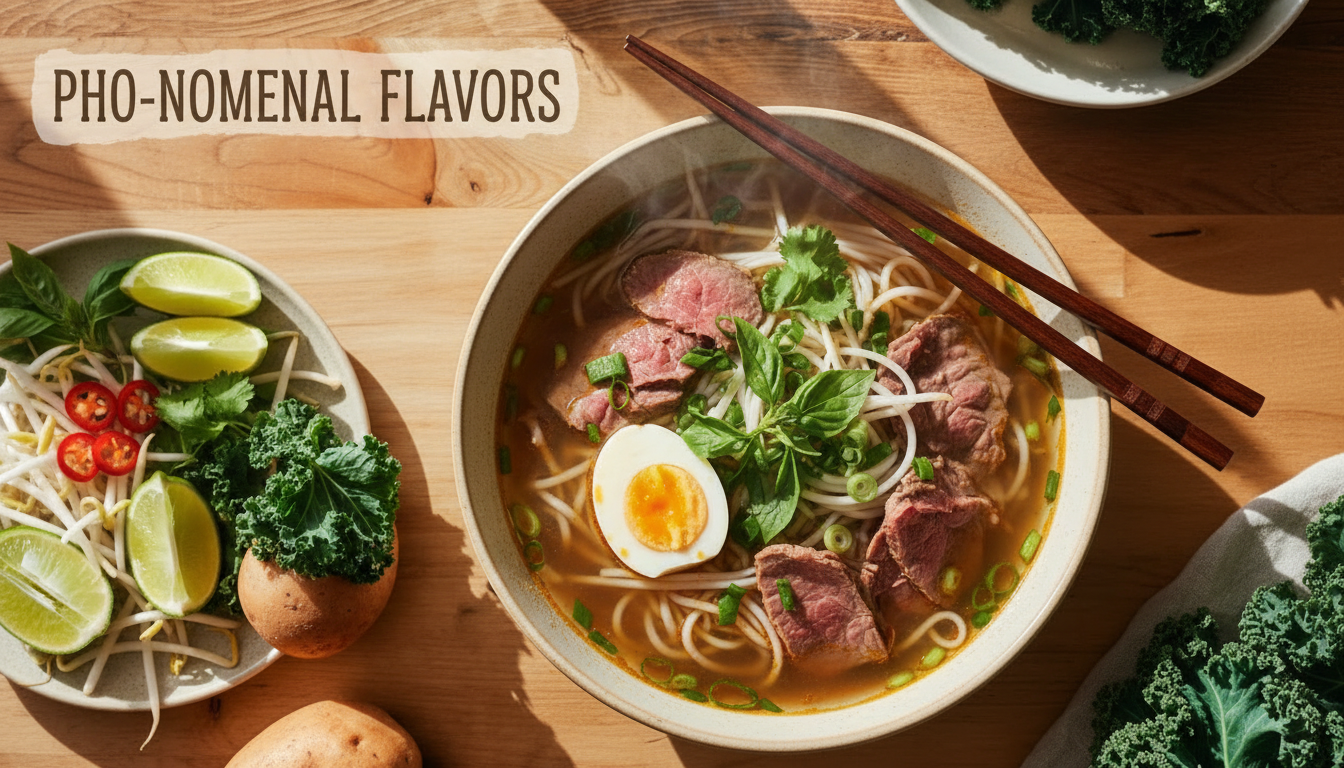
Pho is equal parts comfort food and craft: a clear, aromatic broth, tender proteins, springy noodles, and a build-your-own finish of herbs and condiments. This guide breaks pho and other Vietnamese soups into practical steps—broth, noodles, proteins, and garnishes—so each bowl tastes balanced and fresh, whether cooking for a weeknight dinner or a slow Sunday simmer. For background on pho’s place in Vietnamese cuisine, see Britannica’s overview of pho.
Great Vietnamese soup doesn’t rely on one big flavor; it lands because multiple small choices add up to balance and clarity.
Beef pho (pho bò) typically leans on roasted/charred aromatics plus warm spices for a rounded, lingering finish. Chicken pho (pho gà) runs lighter, often more ginger-forward and fragrant, making it ideal when you want something clean and quick-tasting.
Rice noodles (bánh phở) vary by width. Narrow noodles feel delicate and slurp easily; wider noodles bring more chew and “cling” to the broth. Pick a cut that matches how hearty you want the bowl to feel.
Classic choices include thin-sliced beef, shredded chicken, and meatballs. Vegetarian bowls get satisfying when tofu is paired with mushrooms (and even seaweed), adding body and umami without bones.
The signature “pho moment” happens at the end: raw onion, scallion, cilantro, Thai basil, bean sprouts, lime wedges, and sliced chilies. Fish sauce and rock sugar (or a small amount of sugar) help round the broth without making it sweet—think “smoother edges,” not dessert.
Clarity is a method, not a mystery. The goal is to coax flavor out gently while keeping proteins and fat from emulsifying into the liquid.
For safe cooling, storage, and reheating of stock and leftovers, follow USDA food safety guidance for leftovers and general best practices from the CDC food safety resource hub.
Once you understand how broth style and toppings change the “shape” of a soup, it becomes easier to shop and cook with intention.
| Soup style | Signature flavor | Noodle/rice | Best toppings |
|---|---|---|---|
| Pho bò | Warm spices + charred aromatics | Bánh phở (rice noodles) | Thai basil, lime, bean sprouts, sliced onion |
| Pho gà | Ginger-forward, delicate | Bánh phở (rice noodles) | Cilantro, scallion, lime, chilies |
| Bún bò Huế | Lemongrass + chili heat | Round rice noodles (bún) | Banana blossom, herbs, lime |
| Miến gà | Clean chicken broth | Glass noodles (miến) | Fried shallots, herbs, pepper |
| Canh chua (sour soup) | Tamarind tang + herbs | Served with rice | Pineapple, tomatoes, herbs |
Pho-nomenal Flavors: A Hands-On Guide to Vietnamese Soups & Pho (Digital Ebook) is designed like a cooking session you can repeat: learn what each ingredient is doing, when to add it, and how to adjust when your broth needs more lift, sweetness, or depth.
Parboil and rinse bones, then keep the pot at a gentle simmer (not a rolling boil). Skim frequently early on and strain through a fine-mesh strainer for a clean finish.
Yes—use salt plus a small amount of soy sauce, then build depth with mushrooms, roasted onion/ginger, and a longer simmer. The flavor will be different, but it can still taste balanced and satisfying.
Soak or blanch rice noodles just until tender, then rinse briefly to stop cooking. Reheat right before serving by dunking them in hot broth or hot water to prevent mushy noodles.









Leave a comment