Greek comfort food has a way of feeling both celebratory and grounded—olive oil, lemon, oregano, garlic, and that unmistakable balance of savory richness with bright, clean edges. The good news is that two of the most iconic favorites, moussaka and souvlaki, don’t require restaurant equipment or an all-day timeline. With a technique-first approach and a few practical shortcuts, you can keep the flavors traditional while making the process realistic for weeknights and relaxed weekend cooking.
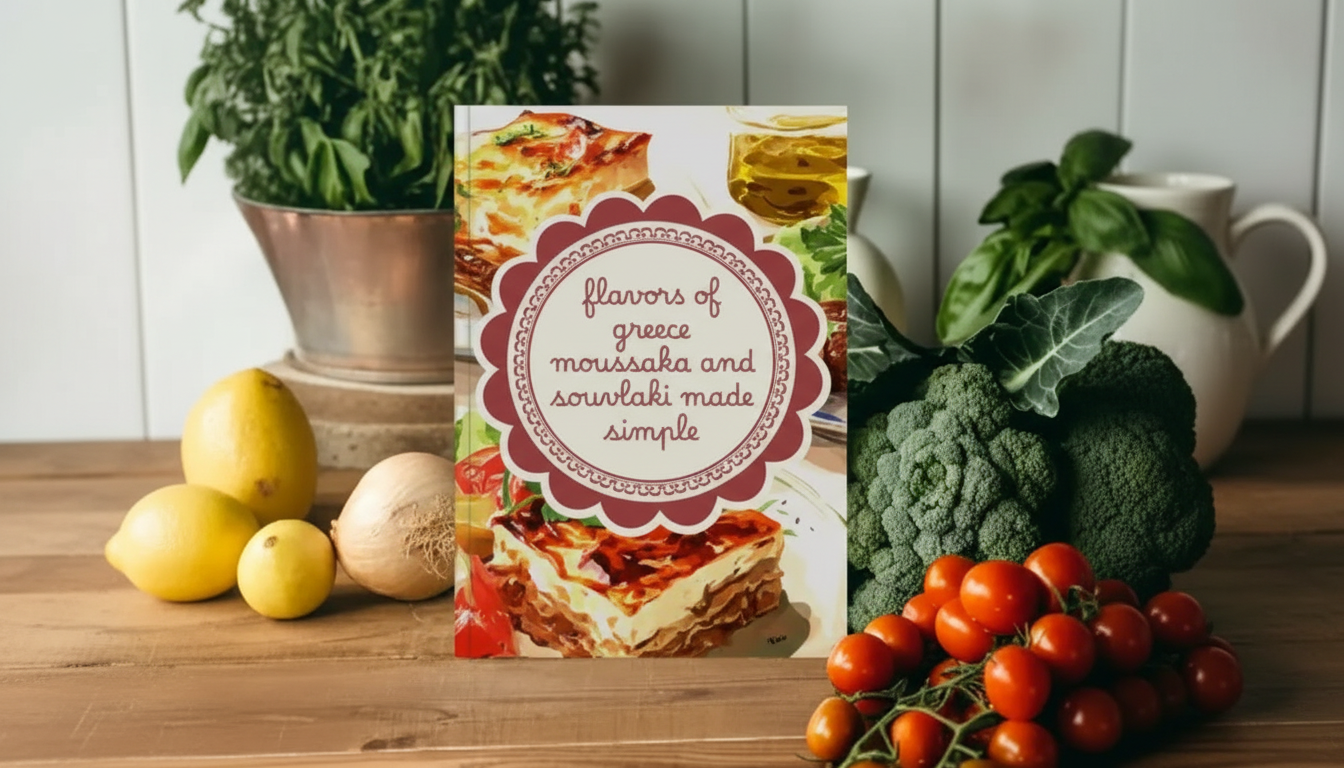
If you want a structured, repeatable path from “I love Greek food” to “I can cook it confidently,” start with the Flavors of Greece Moussaka and Souvlaki Made Simple (digital cookbook)—a focused digital guide built around these two classics and the supporting sauces, timing, and assembly that make them come out right.
For more background on the broader ingredients and regional influences that shape these flavors, see Encyclopaedia Britannica’s overview of Greek cuisine.
Moussaka becomes far less intimidating when you treat it like a three-part build rather than a single marathon recipe: (1) eggplant and/or potato layers, (2) a spiced meat-tomato sauce, and (3) a creamy béchamel-style topping. Each component is simple on its own; success comes from getting the moisture and timing right.
Seasoning-wise, look for savory tomato-meat depth with gentle warm spice—often cinnamon or allspice—kept subtle and balanced by salt and a touch of acidity. If you’re using lamb, the warm spices can be slightly more noticeable; with beef, keep them restrained for a cleaner finish.
Souvlaki is one of the most forgiving ways to get bold Greek flavor fast. The “secret” is mostly about consistency: small, evenly cut pieces cook quickly and brown more predictably than large chunks.
For food safety, cook to safe minimum internal temperatures and rest briefly before serving; the USDA’s Safe Temperature Chart is a reliable reference.
| Staple | Role in classic flavor | Easy swap if unavailable |
|---|---|---|
| Extra-virgin olive oil | Fruity richness and aroma | Standard olive oil (finish with a drizzle of better oil if available) |
| Dried oregano | Signature herbal backbone | Marjoram or a lighter hand of Italian seasoning |
| Lemon | Brightens meat, sauces, and sides | Red wine vinegar (use less; add to taste) |
| Greek yogurt | Creamy tang for sauces (tzatziki-style) | Plain yogurt strained through a cloth or coffee filter |
| Feta | Salty tang for finishing and sides | Sheep’s milk or brined white cheese; mild goat cheese with extra salt |
| Tomato paste | Concentrated depth in meat sauce | Reduced tomato sauce (simmer longer to thicken) |
When you’re ready to make these dishes part of your regular rotation, the Flavors of Greece Moussaka and Souvlaki Made Simple (digital cookbook) keeps the process organized—so the flavors stay classic without the planning getting complicated.
Yes. Prepare the vegetables and meat sauce in advance, assemble the layers, cover, and refrigerate; bake when ready, adding a little extra time if it’s going into the oven cold so the center heats through evenly.
Use very high heat in a skillet or under the broiler, cook in small batches to avoid steaming, and rest the meat for a few minutes before serving. Even cuts and a salted, lemon-olive oil marinade also help prevent dryness.
Zucchini and potatoes are common alternatives. Zucchini releases more moisture, so it benefits from salting and draining; potatoes are sturdier and help keep the layers from turning watery.











Leave a comment